Refrigerated Air Dryer for Compressed Air Systems
Moisture is a common concern in industrial compressed air systems. When atmospheric air is compressed, its water vapour concentration increases. As the compressed air cools, this moisture can condense into liquid water and enter pipelines, pneumatic equipment and production processes.
A refrigerated air dryer helps control this problem by cooling compressed air so that water vapour condenses into liquid droplets. The collected moisture is then separated and drained from the system before the dried air moves towards downstream equipment.
FiltXpert offers industrial compressed air filtration and air treatment solutions, including refrigerated air dryer options for industrial applications. Selecting a suitable dryer depends on airflow capacity, operating pressure, inlet temperature, ambient conditions and the required pressure dew point.
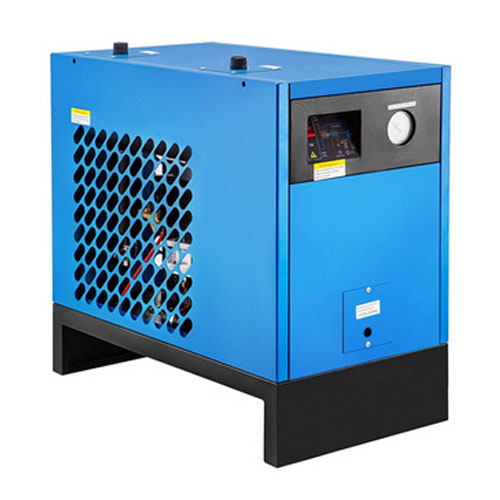
What Is a Refrigerated Air Dryer?
A refrigerated air dryer is a compressed air treatment system that removes moisture by cooling compressed air below its initial temperature. During this process, water vapour condenses into liquid water, which is collected by a moisture separator and discharged through a drain.
Refrigerated air dryers are commonly used in manufacturing facilities, engineering workshops, automotive units, textile plants and other industries where compressed air needs to be protected from excessive moisture.
Many standard refrigerated dryers are designed to provide a pressure dew point around +3°C under specified operating conditions. The actual dew point depends on the dryer model and its operating parameters.
How Does a Refrigerated Air Dryer Work?
A refrigerated air dryer uses a refrigeration circuit and heat exchangers to cool compressed air and separate condensed moisture. The working process generally includes the following stages.
1. Compressed Air Inlet
Hot, moisture-laden compressed air enters the dryer from the compressor or air receiver system. An aftercooler may be installed before the dryer to reduce the incoming air temperature.
2. Air-to-Air Heat Exchange
In many dryer designs, incoming hot compressed air passes through an air-to-air heat exchanger. It exchanges heat with the outgoing cold, dry air, reducing the incoming air temperature and improving overall thermal efficiency.
3. Refrigeration and Cooling
The compressed air passes through a refrigerant-to-air heat exchanger, where the refrigeration circuit lowers its temperature. As the air cools, water vapour condenses into liquid droplets.
4. Moisture Separation
The condensed water is collected by a moisture separator. This prevents the separated liquid from continuing into the downstream compressed air pipeline.
5. Automatic Condensate Drainage
The collected condensate is discharged through a suitable drain arrangement. The drain must operate correctly to prevent water accumulation inside the dryer.
6. Dry Air Outlet
The cooled, moisture-reduced compressed air may pass through the air-to-air heat exchanger again before leaving the dryer. This helps raise its outlet temperature and reduces the risk of external pipeline condensation under suitable conditions.
Types of Refrigerated Air Dryers
Refrigerated air dryers are available in different configurations to suit industrial airflow requirements and operating conditions.
1. Non-Cycling Refrigerated Air Dryer
In a non-cycling dryer, the refrigeration compressor generally operates continuously while the dryer is running. The system maintains cooling through its refrigeration circuit and is commonly considered for applications with relatively consistent compressed air demand.
Its suitability depends on the plant's airflow pattern, operating hours and energy requirements.
2. Cycling Refrigerated Air Dryer
A cycling dryer uses a thermal storage arrangement to maintain cooling. The refrigeration system can adjust its operation according to the cooling demand, helping reduce energy consumption during periods of lower compressed air usage.
The actual energy savings depend on the load profile, dryer design and operating conditions.
3. Air-Cooled Refrigerated Air Dryer
An air-cooled dryer uses ambient air to remove heat from the refrigeration circuit through a condenser. It is generally considered where cooling water is not readily available.
Adequate ventilation and suitable ambient temperature conditions are important for proper operation.
4. Water-Cooled Refrigerated Air Dryer
A water-cooled dryer uses cooling water to remove heat from the refrigeration circuit. It may be suitable for industrial facilities with an appropriate cooling water supply and supporting infrastructure.
Water quality, flow rate and temperature should be considered during selection.
Key Features to Consider in an Industrial Refrigerated Air Dryer
When evaluating a refrigerated air dryer, buyers should consider the following technical and operational factors:
-
Moisture removal: The dryer should achieve the pressure dew point required by the compressed air application.
-
Airflow capacity: The rated capacity should match the actual compressed air demand.
-
Operating pressure: The dryer must be suitable for the system's normal and maximum operating pressure.
-
Inlet air temperature: High inlet temperatures can affect drying capacity and should be considered during selection.
-
Ambient temperature: The surrounding temperature influences the performance of the refrigeration system, particularly in air-cooled designs.
-
Cooling arrangement: Air-cooled and water-cooled configurations have different installation and utility requirements.
-
Pressure drop: The pressure drop across the dryer should be considered when evaluating the complete compressed air system.
-
Condensate drainage: A suitable drain arrangement is necessary for removing collected water.
-
Maintenance access: The dryer should allow convenient inspection and servicing of components such as heat exchangers, drains and condensers.
Refrigerated Air Dryer vs Desiccant Air Dryer
Both refrigerated and desiccant dryers remove moisture from compressed air, but they work through different methods and achieve different drying levels.
| Comparison factor | Refrigerated Air Dryer | Desiccant Air Dryer |
|---|---|---|
| Working principle | Cools air to condense water vapour | Uses desiccant material to adsorb moisture |
| Typical pressure dew point | Around +3°C for many standard models | Can achieve much lower dew points, depending on design |
| Common applications | General industrial compressed air systems | Applications requiring very dry compressed air |
| Maintenance | Refrigeration circuit, heat exchanger and drain servicing | Desiccant inspection or replacement and regeneration system maintenance |
| Energy requirements | Electricity for refrigeration | Energy for regeneration, depending on dryer design |
| Selection priority | General moisture control | Low pressure dew point requirements |
A refrigerated dryer is commonly suitable for general industrial compressed air applications. A desiccant dryer may be more appropriate where the process requires a much lower pressure dew point, such as certain sensitive manufacturing or low-temperature applications.
The required air quality should be established before choosing either technology.
Applications of Refrigerated Air Dryers
Refrigerated air dryers are used in industrial facilities where moisture control is important for compressed air distribution and equipment operation.
1. Automotive Industry
Compressed air is used in pneumatic tools, assembly operations and certain painting-related processes. Moisture control helps reduce water-related issues in connected equipment.
2. Textile Industry
Textile manufacturing uses compressed air for different pneumatic operations. A suitable dryer helps control moisture entering pneumatic equipment and air distribution lines.
3. Engineering and Fabrication Units
Workshops and fabrication facilities use compressed air for pneumatic tools, machinery and production equipment. Refrigerated dryers help reduce liquid moisture in these systems.
4. Pharmaceutical Industry
Compressed air may be used in packaging, processing and supporting operations. Dryer selection must be based on the required air quality and applicable process requirements. Additional treatment may be necessary.
5. Food and Beverage Industry
Compressed air is used in packaging machinery, pneumatic controls and production support systems. Where compressed air comes into direct or indirect product contact, the complete air treatment system must meet the relevant hygiene and air quality requirements.
6. Printing and Packaging Industry
Moisture in compressed air can affect pneumatic equipment and certain production operations. Refrigerated air dryers help maintain more consistent compressed air conditions.
7. CNC and Automation Applications
Automated machinery and pneumatic control systems can benefit from moisture-controlled compressed air, helping reduce water-related operating issues.
Benefits of Using a Refrigerated Air Dryer
Installing a correctly selected refrigerated air dryer can support the reliability of an industrial compressed air system.
-
Reduced liquid moisture: Condenses water vapour and separates collected liquid water from compressed air.
-
Pipeline protection: Helps reduce moisture-related corrosion risks in compatible compressed air distribution systems.
-
Equipment protection: Reduces the amount of liquid water reaching pneumatic tools, valves and connected machinery.
-
Improved process consistency: Helps maintain more controlled compressed air conditions for industrial operations.
-
Reduced water-related maintenance: Helps prevent issues associated with excessive condensate in air lines and equipment.
-
Better air treatment: Works as part of a complete compressed air treatment arrangement with suitable filters and drainage components.
A refrigerated dryer does not remove every type of compressed air contaminant. Oil aerosols and solid particles require suitable filtration, while applications needing very low moisture levels may require additional drying technology.
How to Choose the Right Refrigerated Air Dryer
Choosing the correct dryer capacity and configuration is important for achieving the required drying performance.
1. Check Compressor Airflow Capacity
Identify the compressor's actual airflow output and compare it with the dryer capacity. The dryer should be selected using its rated performance under the relevant operating conditions, not only its nominal capacity.
2. Confirm Operating Pressure
Check the normal operating pressure and maximum pressure requirements of the compressed air system. The selected dryer must be suitable for the intended pressure range.
3. Evaluate Inlet Air Temperature
The temperature of compressed air entering the dryer affects its moisture load and drying capacity. Confirm the expected inlet temperature, particularly where an aftercooler is installed.
4. Consider Ambient Temperature
The surrounding temperature can affect the refrigeration system's heat rejection and overall performance. This is especially important for air-cooled models installed in hot industrial environments.
5. Identify the Required Pressure Dew Point
Different applications have different moisture control requirements. A standard refrigerated dryer may be suitable for general industrial use, while processes requiring a much lower pressure dew point may need a desiccant dryer.
6. Select the Cooling Arrangement
Evaluate whether an air-cooled or water-cooled configuration is more appropriate for the plant's available utilities and installation environment.
7. Check Filtration Requirements
A dryer should be selected as part of the complete compressed air treatment system. Suitable upstream and downstream filters may be required depending on the application and air quality target.
Maintenance Tips for Refrigerated Air Dryers
Regular maintenance helps maintain drying performance and reduces the risk of unexpected equipment problems.
-
Clean the condenser regularly, particularly in dusty industrial environments.
-
Inspect the condensate drain to ensure that collected water is discharged correctly.
-
Check the refrigeration system for abnormal operating conditions.
-
Inspect heat exchangers and air connections for leakage or blockage.
-
Monitor inlet and outlet temperatures.
-
Check pressure drop across the dryer.
-
Follow the equipment manufacturer's recommended maintenance schedule.
If the outlet air contains excessive moisture, inspect the dryer load, inlet conditions, drain operation and refrigeration circuit before deciding on corrective action.
Refrigerated Air Dryer Supplier in Canada – FiltXpert
FiltXpert offers industrial compressed air treatment and filtration solutions for different industrial requirements. Its product range includes refrigerated air dryers, air compressor line filters, air compressor air filters, air compressor oil filters and air oil separators.
Selecting a suitable refrigerated air dryer requires an understanding of compressor capacity, operating pressure, inlet temperature and required pressure dew point.
Contact Us
Feel Free To Get In Touch With Us
Office Address:
17 Fortune South Industrial Park, S.P.ring road, near Naroda G.I.D.C, nana chiloda, Ahmedabad, Gujarat 382330